

In the digital chaos, where every piece of content is greedily sucking up personal data, we scroll without a break and skim through news, ads, videos and texts. Sometimes, however, we stop suddenly between two posts. Our attention falls on something that doesn’t just show, but speaks. This is the power of illustration in the age of endless scrolling — to slow us down to see meaning conveyed in visual language.

Illustration has long since left the pages of children's books. It lives in interfaces, social networks, icons, audiobook covers. It knows how to serve and influence at the same time. An example of this is the national Biennial of Illustration, revived in 2018 after a decades-long hiatus. It proves how deep this genre is — as art, as communication, as a social message. The Biennial does not just collect works, but reflects time. It becomes a visual testament to who we are and what excites us. At the same time, it makes us stop and look at the world with our own eyes, and not just through the screen.
There are no exact statistics on how many times we scroll per day, but it is a fact that we spend an average of about 6 hours and 37 minutes online, over 2.5 hours of which on social networks. We scroll constantly, everywhere and almost automatically. The price is high: more stress and anxiety, less concentration and lower self-esteem, disturbed sleep, addictions, social isolation. Therefore, the need for a balance between the digital and the real is glaring..
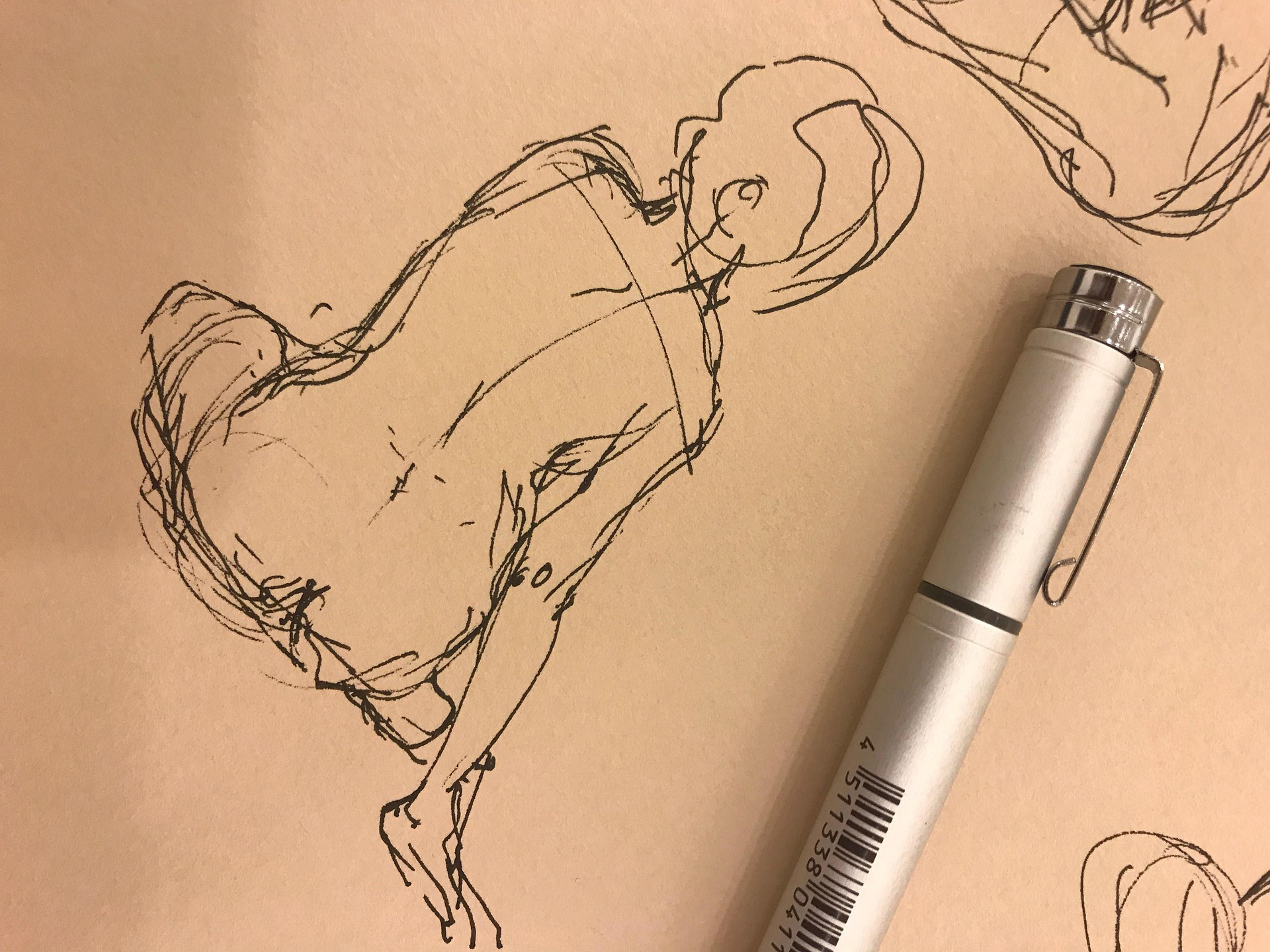
Illustration can be that balance. Studies in the field of visual psychology show that painted images hold attention longer than photographs. The reason — the viewer instinctively recognizes in them a personal voice, style and subjectivity, and in a world of algorithms and templates this is rare. One minute of looking at an illustration is a small digital detox — a freeze frame in which the flow of information stops, stress decreases, and the brain has time to make sense of impressions.
This is an invitation to get out of automatic mode. To feel a stronger connection with art, the author's message and our own reactions. To charge ourselves with new emotions and ideas that stimulate contemplation and creative thinking, instead of remaining trapped in the boredom and superficial entertainment of mindless scrolling.
But a new challenge has emerged on the horizon — artificial intelligence. Can a neural network convey a personal story, a feeling, a nuance? Can it create an image that “speaks” and not just “looks”? Many say “no.” Human illustration is not just a technique, but also emotions, a position, a responsibility. That is its strength — to be alive and honest.
Author Elitsa Vinyarchek


Add comment