

Yesterday (October 31, 2017) the first discussion organized by the website "Vapreki" was held at the capital's Art Alley gallery, which was entitled "Illustration for Children - Between Manufacture and True Art". The participants were art critic Filip Zidarov; artists Tonya Goranova, Kiril Zlatkov, Sotir Gelev, Penko Gelev and Mila Yaneva - Tabakova; author Viktor Samuilov and publisher Gergana Dimitrova (List Publishing House).
Despite the organizers' desire for a representative discussion-conversation on the topic, it was quite mediocre and not particularly constructive. Some "alphabetical truths" were expressed in the conversation, as Viktor Samuilov called them, but as Tonya Goranova herself noted, "we all say these things to each other". The attempt to "attack" various publishers in connection with their vision of children's books and textbooks, which were not present at the discussion*, was particularly impressive.
Overall, the discussion had a very “homely” nature. Despite the truly recognized authors who were invited, it once again remained encapsulated within the guild. Attempts to provoke other publishers, state structures and society will never reach them, because within such small, unsynchronized and conceptually unclear conversations, the conclusions once again remain for those speaking them. It remains unclear what exactly the illustrators want from the publishers. Where do the writers position themselves in the dialogue. Why, how and whom should the state support, sponsor and assist? What is the pricing of the entire process of creating a book in order for it to reach the mass consumer. And most of all – what exactly and clearly is expected to happen, be it as a process or as an end result.
Among the guests of the discussion were the artists Tsvyatko Ostoich, Petar Stanimirov, Ralitsa Nikolova, as well as younger artists and students from the Iliya Petrov National Institute of Fine Arts. Here is part of the actual conversation:
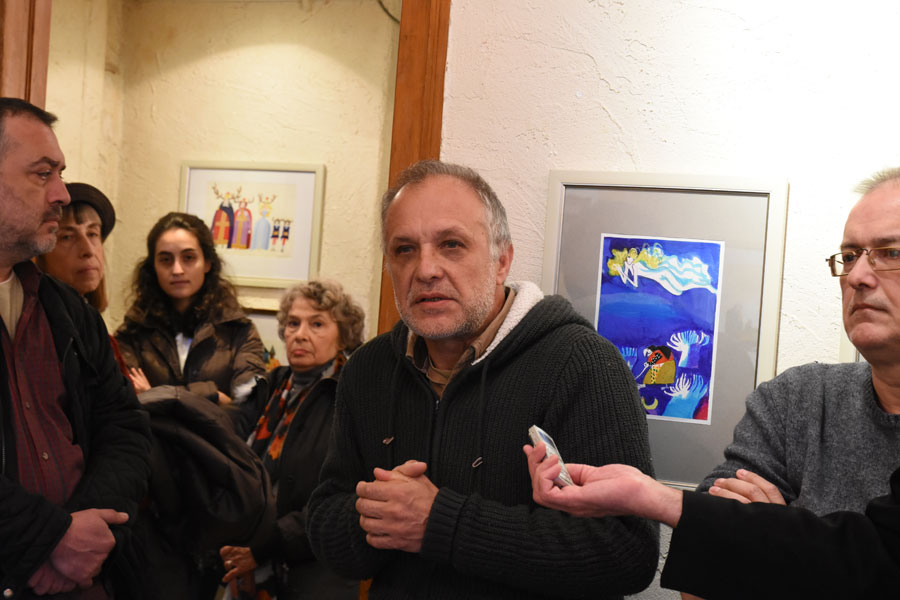
Filip Zidarov made a brief retrospective of the history of Bulgarian illustration, focusing on the 1960s and 1970s. The questions about “aesthetic and spiritual conquests”, “schools that prepare generations, stepping on tradition”, “the visual response to literature” within the framework of the historical view were only briefly shared as reflections by an art historian. "I can't say now whose school the current young illustrators belong to. We're not even talking about the aspect of a school as a stylistic one. Because, for example, Boris Angelushev had an awful lot of followers and epigones, some of them couldn't even be distinguished from him. Many other authors were influenced by their teachers, while at the moment there is a rather weightless state in the understanding of illustration in general, which in our country began around the 1990s with the collapse of publishing activities. (…) What is missing from that part of contemporary Bulgarian illustration that I don't like – it lacks spirituality, understanding, that which is beyond drawing."
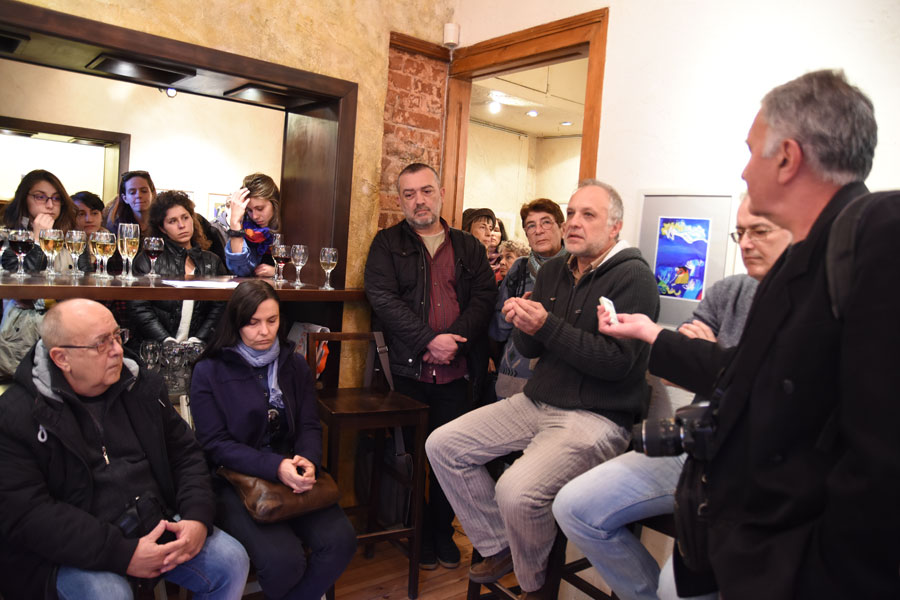
Another aspect that was highlighted as a problem of contemporary illustration is the market and the lack of artistic education in publishers, who offer and impose a certain imagery in books, especially those for children. Illustration or provocation? – this was the question posed to the discussants. Sotir Gelev opposed the definition of provocation: “Why does something have to provoke us constantly and necessarily? Illustration does not need to be provocation, it must be honest, sincere and with understanding, and if we add to this a little craftsmanship, there is no need to provoke anyone at all. Children are provoked anyway – for them everything is new.”
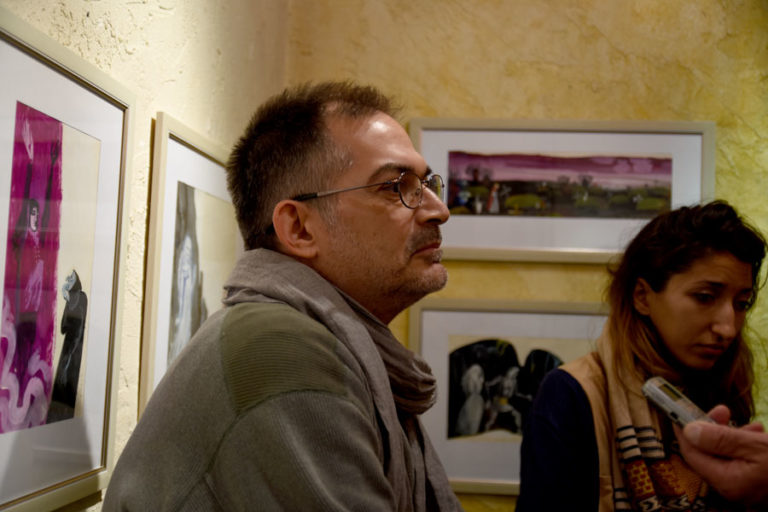
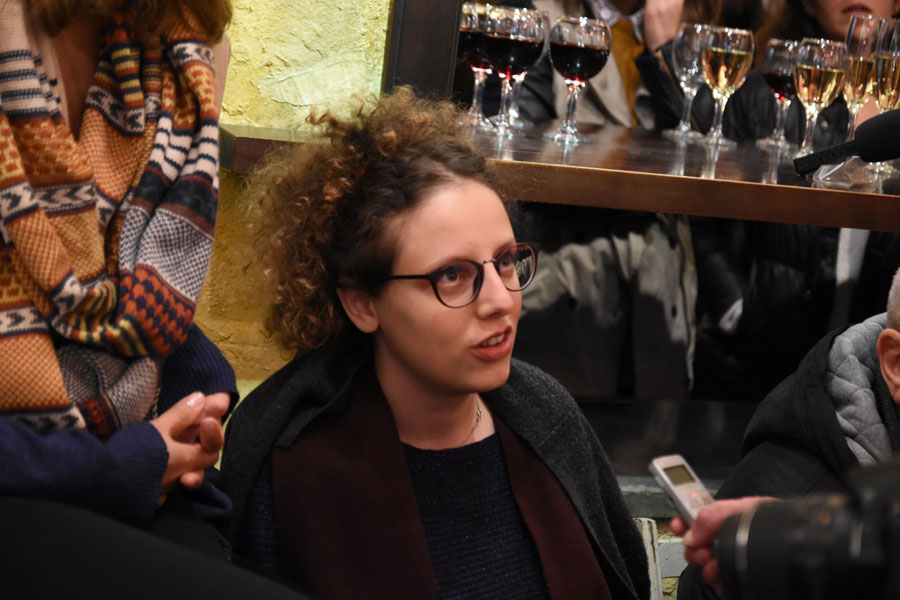
Should we encapsulate ourselves in schools or is this already an outdated idea of inheriting a “craft”. “If this can be called a “school”, this striving to somehow recreate the feeling of a book – this is my school. I think that children are much more broadly defined and these definitions of “abstract” and “realistic” are definitions of adults.” – commented Mila Yaneva-Tabakova, one of the young artists in Bulgaria, whose work we are increasingly finding on the market.
“I came here to learn!” – said Viktor Samuilov. “For me personally, it is not important to simply create the vision of a text, because as we know, children prefer to watch a film rather than read the script for it. (…) What is important for illustration is that there is a coincidence of the inventions.”
Kiril Zlatkov summarized: "Good illustrations must be flowing, made in one breath, categorical and infinitely pure in approach and aesthetic view, so that they can move to the next level - the meaning, to be able to complement what remains in our heads from literature."

The only publisher in the group – Gergana Dimitrova (publisher List) “took the blame” for the publishers in Bulgaria. “Perhaps the main reason for the quality of the books are the publishers. And in fact, the publishers have no interest in giving Bulgarian artists the opportunity to create, to illustrate – there are fewer and fewer cases when such orders are given. (…) The problem with most publishers is that they proceed from what the buyers want, and this market principle destroys aesthetics. The responsibility always lies with the publishers – they must create the taste, because if there is no one to publish the book, it will not reach the readers. The publishers must be made to take risks.”
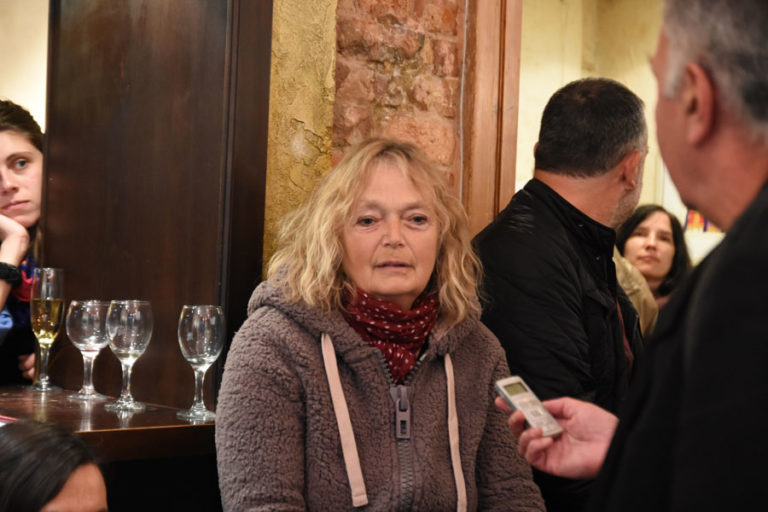
Tonya Goranova seemed to have finished the conversation: “There is no way out for us, the public must rise up, not us, and if the criterion is raised, all these talented people could have bread.”, and Sotir Gelev added “You talk like that as if the public cares?”.
Text and photos: Milena Radeva
* The website “Bulgarian Illustration” takes the liberty of not citing the mentioned publishing houses, as they were not present at the discussion to express their opinion and position.
Add comment